





Imagine you own a physical retail store in a busy mall. Every day, 1,000 people walk through your doors. They browse the aisles, touch the products, and check the price tags. But at the end of the day, only 15 of them actually buy something. The other 985 walk out empty-handed.
If this were happening in real life, you wouldn’t just pay to get more people through the door; you would try to figure out why everyone is leaving without buying.
This is exactly what happens on most e-commerce sites today. This is where Conversion Rate Optimization (CRO) comes in.
In this guide, we’ll dive deep into why CRO is not just a “nice-to-have”—it is the single most critical factor for the profitability of your online store in 2025.
Traffic vs. Conversion: The “Leaky Bucket” Reality
Many store owners obsess over Traffic Acquisition (SEO, Facebook Ads, Google Ads). While traffic is the fuel, your website is the engine. If your engine is inefficient, that expensive fuel is wasted.
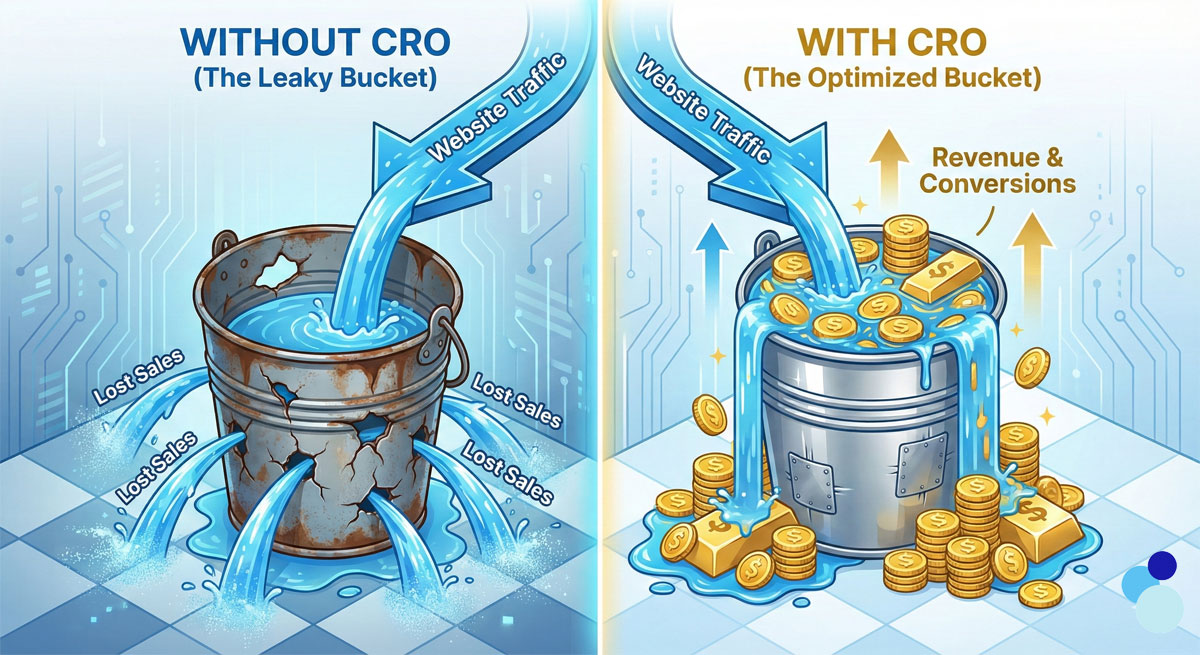
Think of your website as a bucket and traffic as water. If your bucket has holes (slow load times, confusing checkout, lack of trust), pouring more water (money) in won’t fill it up. CRO is the process of patching those holes.
Comparison: Acquisition vs. Optimization
| Traffic Acquisition (SEO/Ads) | Conversion Optimization (CRO) |
| Goal: Get people to visit the site. | Goal: Get visitors to buy. |
| Cost: Costs increase as you scale (CPC rises). | Cost: One-time investment pays off forever. |
| Effect: Linear growth. | Effect: Exponential growth (better ROI on all ads). |
| Analogy: Filling the tank with gas. | Analogy: Tuning the engine for better mileage. |
The Numbers Don’t Lie: Why You Need CRO Now
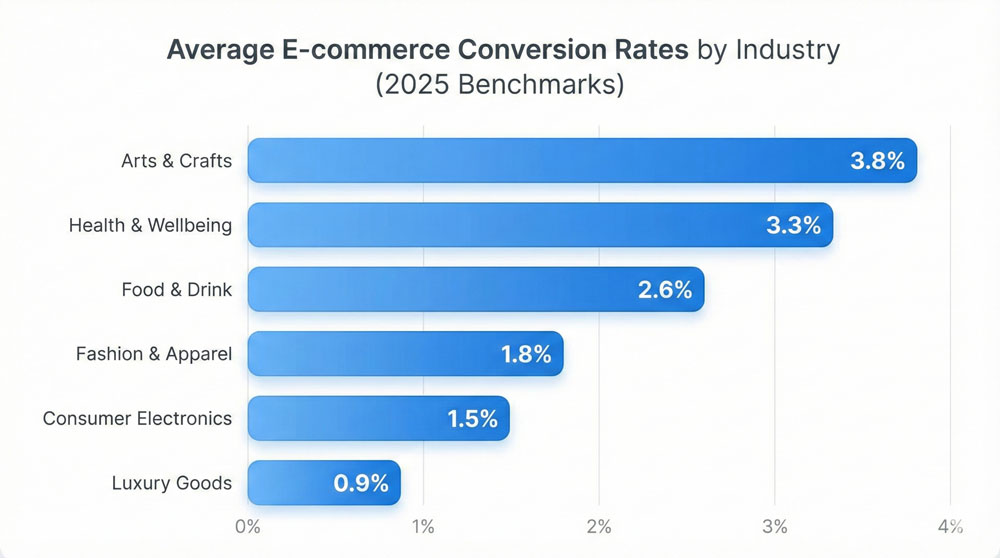
If you think your store is doing “fine,” let’s look at the benchmarks. According to recent data from 2024-2025, the average global e-commerce conversion rate hovers around 1.5% to 3%.
If you are below 1.5%, you are leaving serious money on the table.
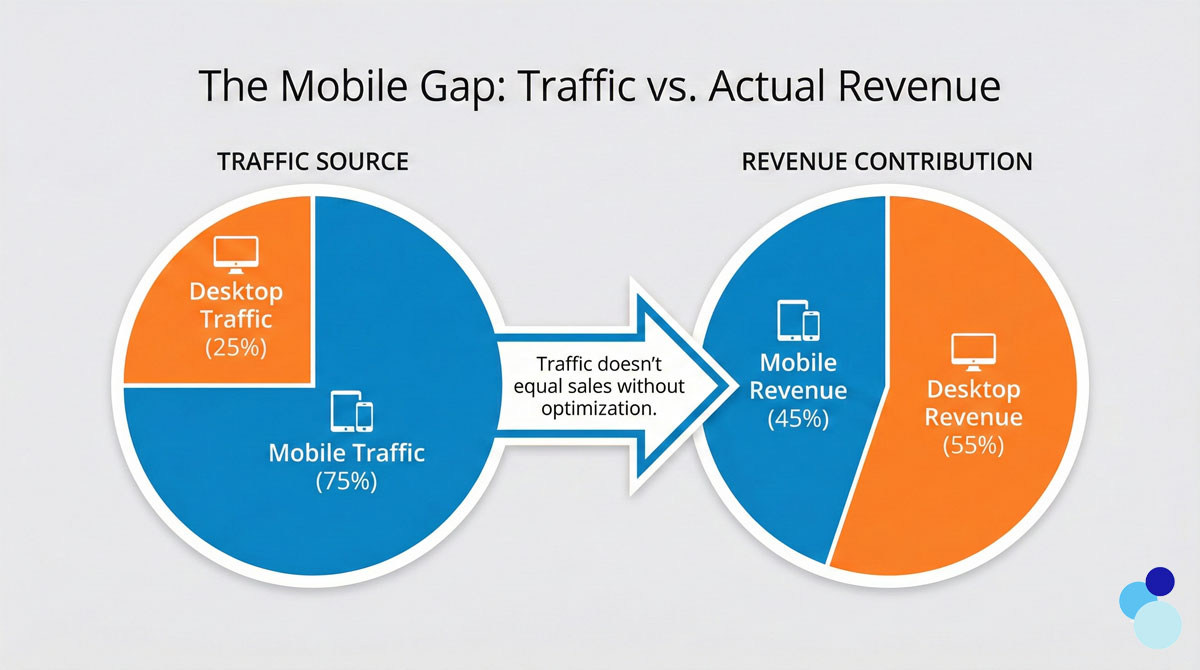
The Mobile Gap: Another critical area for CRO is mobile optimization. While mobile devices often account for 70%+ of traffic, they typically suffer from lower conversion rates compared to desktop.
Real-World Impact: Before & After Examples
What does CRO actually look like in practice? It’s rarely about redesigning the whole website from scratch. Usually, it’s about small, strategic tweaks.
Here are three examples of how subtle changes can lead to massive results.
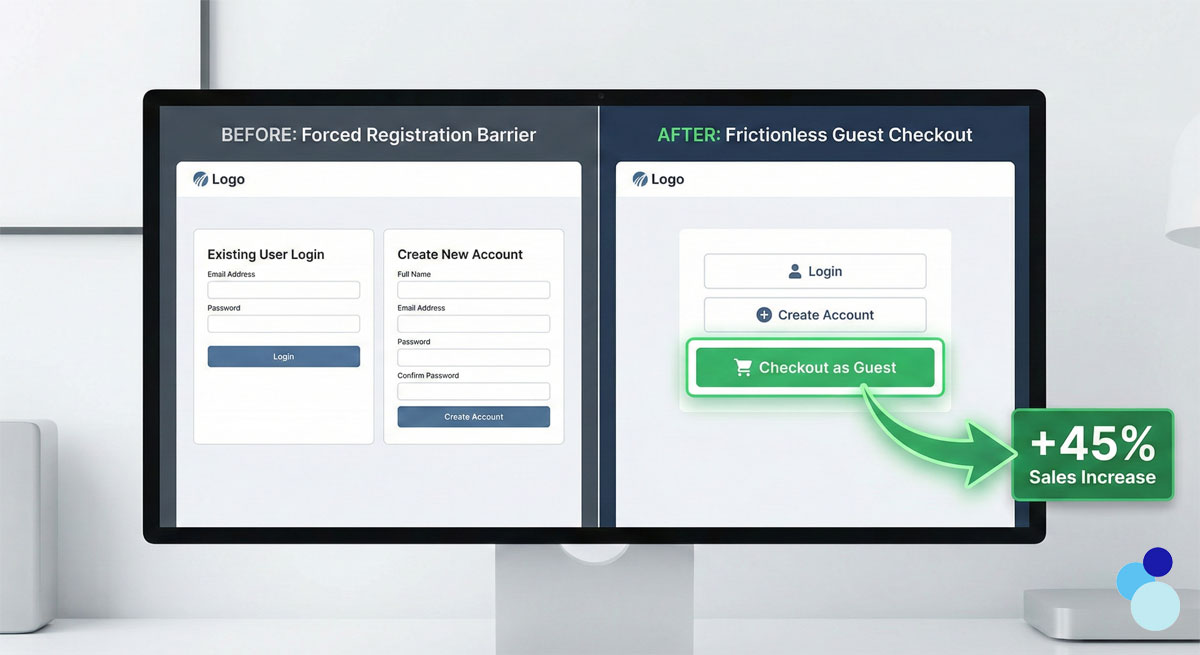
Example 1: The “Guest Checkout” Fix
The Problem: A store required users to “Create an Account” before buying. This caused a huge drop-off.
The Fix: They added a “Checkout as Guest” option.
The Result: +45% Increase in Sales.
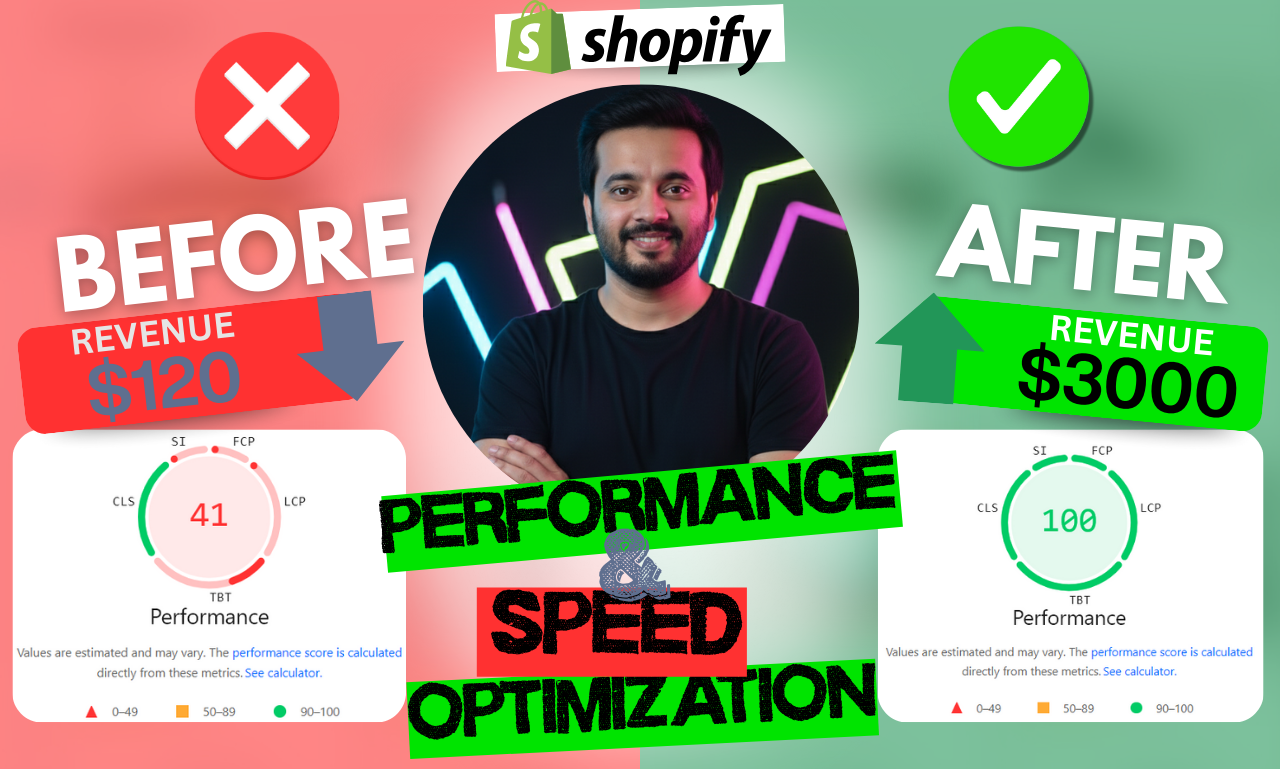
Example 2: Speed Kills (In a Good Way)
The Problem: High-resolution product images were slowing down the product page load time to 4.5 seconds.
The Fix: Images were compressed (WebP format) and “Lazy Loading” was enabled. Load time dropped to 1.8 seconds.
The Result: +14% Increase in Conversions. (Walmart famously found that for every 1 second of speed improvement, conversions increased by 2%).
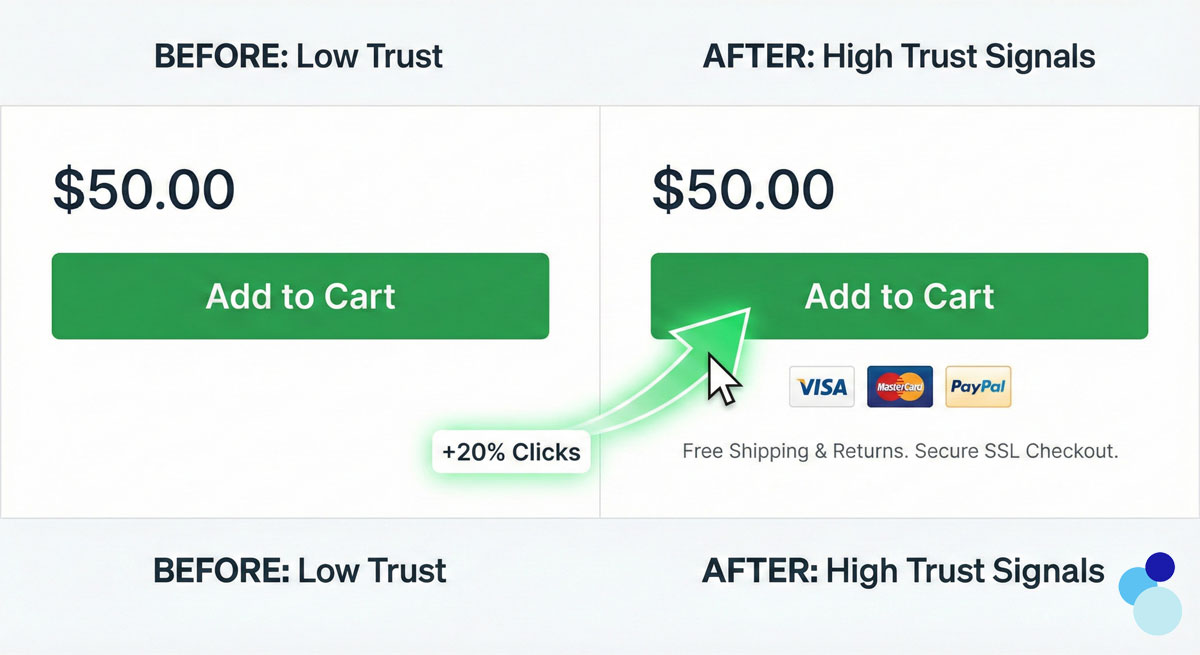
Example 3: Trust Signals on the “Add to Cart” Button
The Problem: Users were browsing products but abandoning the page without clicking “Add to Cart.”
The Fix: Small payment icons (Visa, PayPal, Mastercard) and a “Free Shipping & Returns” badge were added directly under the Add to Cart button.
The Result: +18% Increase in Add-to-Cart Rate.
The Financial ROI of CRO
Let’s do a quick math exercise to see why CRO is powerful.
Imagine your store has these monthly stats:
- Visitors: 10,000
- Conversion Rate: 1%
- Average Order Value: $50
- Total Revenue: $5,000
Scenario A: You double your ad spend to get more traffic.
- Visitors: 20,000
- Conversion Rate: 1%
- Revenue: $10,000 (But you spent double on ads, so your profit margin shrinks).
Scenario B: You invest in CRO to improve your rate from 1% to 2%.
- Visitors: 10,000 (Same traffic!)
- Conversion Rate: 2%
- Revenue: $10,000
The Winner: Scenario B. You doubled your revenue without spending a penny more on ads.
3 Quick Wins You Can Implement Today
- Simplify Your Forms: Remove any field that isn’t absolutely necessary (e.g., do you really need their company name?).
- Add Social Proof: Ensure product reviews are visible above the “fold” (the top part of the screen).
- Check Your Site Speed: Use Google PageSpeed Insights. If you’re in the “Red” zone, you are losing customers.
Conclusion
In the competitive world of e-commerce, the store that makes it easiest to buy is the store that wins. CRO isn’t just a tactic; it’s a mindset of constantly listening to your customers and removing barriers.
At VistaRapid.com, we don’t just build websites; we build high-converting sales engines. If you’re ready to stop the leaks in your bucket and start seeing real growth, it might be time to look at your Conversion Rate Optimization strategy.
Get Your FREE CRO Audit Today ⮞ | OR hire us on Fiverr 🡥