




Is Your Website Burning Your Customers’ Brains?
Why “Cognitive Friction” is the silent killer of conversion rates, and how service providers can fix it.
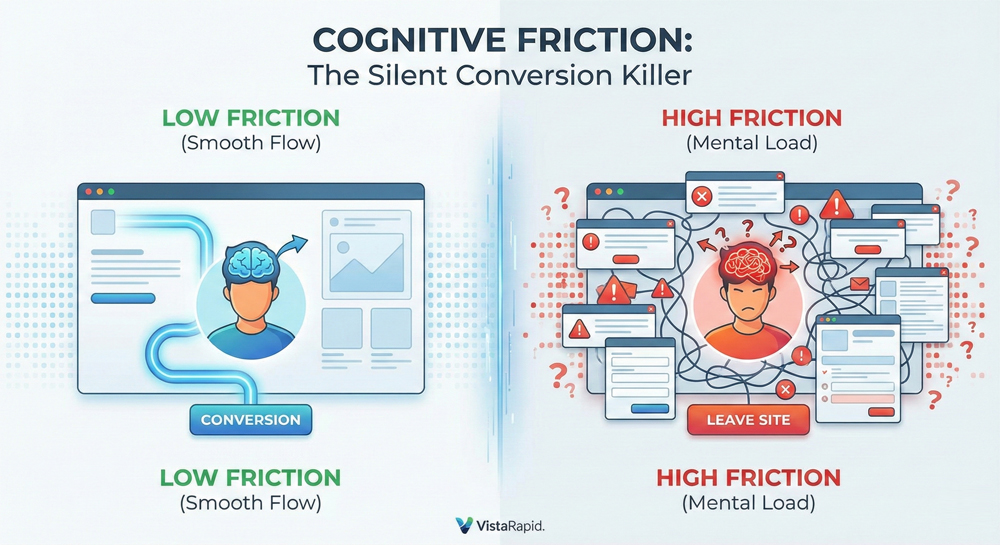
Imagine walking into a grocery store. But instead of clear aisles labeled “Dairy” or “Produce,” the milk is hidden behind a curtain, the apples are filed alphabetically under “Red Sphere Objects,” and to pay, you have to solve a riddle.
You would leave immediately.
Yet, this is exactly what thousands of service websites do to their visitors every day. In the world of User Experience (UX), this mental exhaustion is called Cognitive Friction.
At VistaRapid, we believe that understanding this concept is the difference between a website that sells and a website that repels.
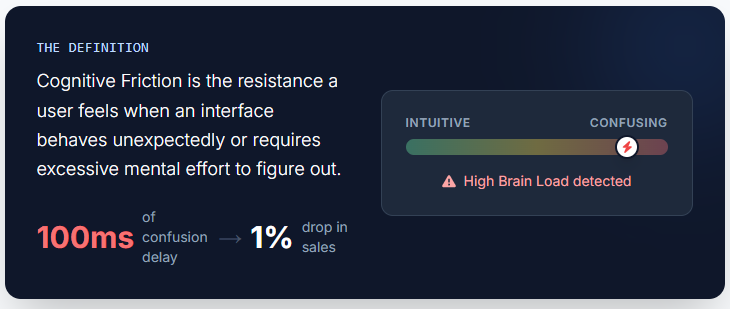
What is Cognitive Friction?
See It In Action: The “Service Request” Test
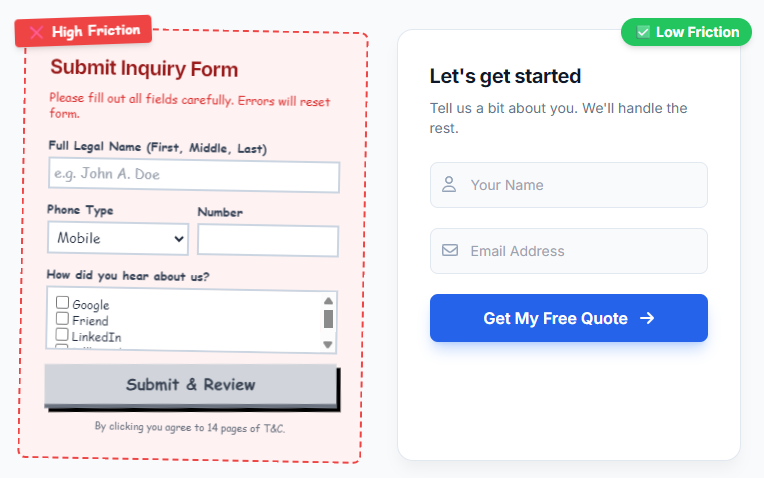
Service providers (consultants, agencies, contractors) often try to be “clever” or provide too much information upfront. Let’s look at the difference between a high-friction interaction and a streamlined one.
Why This Matters for Service Providers
When you sell a service (consulting, legal, creative, repair), you are selling trust. Cognitive friction destroys trust. If a user has to struggle to contact you, their brain subconsciously decides: “If their website is this hard to deal with, working with them will be hard too.”
By applying the “Don’t Make Me Think” rule, we protect the user’s limited supply of mental energy for the only decision that matters: hiring you.
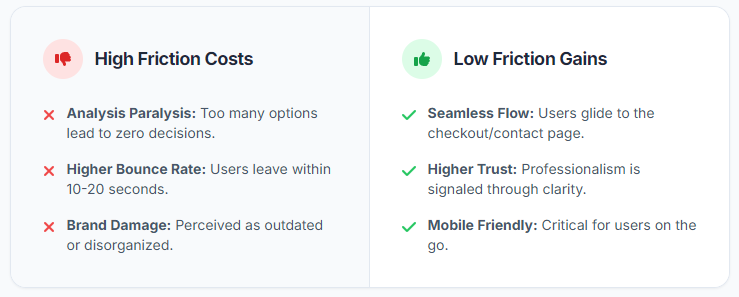
The Impact on Your Business
Remove the friction. Accelerate your growth.
Is your current website pushing customers away with cognitive load? Let us conduct a free UX Audit for you.
Get Your FREE Friction Audit Today ⮞
OR hire us on Fiverr 🡥